Can I Use My First Krillion Guess Like a Wordle Opener?
You can think of a Krillion opener, but keep it in your head while you’re still deciding. A first guess in Wordle can uncover useful letters and leave you five more turns. In a Krillion practice dive, your first accepted answer earns its points and closes that question. Press Enter when you’d be happy to keep the answer on the screen.
What one guess buys you in Wordle
Take a made-up Wordle with the hidden word PLANT. You open with SLATE. That’s a useful guess even though it misses. The L and A land in exactly the right places, the T is present somewhere else, and the S and E can be crossed off. Before you typed, almost any five-letter word was a candidate. Afterwards, a word with E at the end makes very little sense. You’ve spent a turn and learned something you can use on the next one.
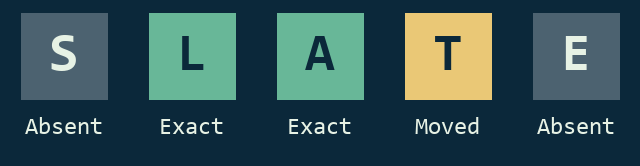
That explains the appeal of an opening word you know by heart. Some days it solves very little, yet the feedback can still earn its keep. Every clue in that row belongs to one particular hidden word. The six-guess format in The New York Times’ Wordle gives you room to act on it.
Now try the same move with a geography question
In this practice game you might be asked to name a Canadian province. Suppose Ontario comes to mind immediately. You type it, thinking you’ll use the response to work out what the game really wants. Up comes a scored reveal. Ontario fits the question, so you’ve done exactly what the game asked. There’s no second row where you can now enter another province and take the better of the two.
Try a different opening in the same situation. Suppose you enter Yukon, which is a territory. This time the answer box stays open and you get the unlisted-answer message. The game hasn’t told you that Y is wrong, that another place starts with U or that your guess was geographically close. You can replace the whole word and try again while the clock runs. The useful clue was there before your first keystroke, in the scope that asks for a province.
| What you want to do | Wordle | Krillion practice |
|---|---|---|
| Explore a possibility | A valid guess uses a turn and returns letter feedback. | Think of candidates during the preview and answer window. |
| Submit something correct | Finding the hidden word completes the puzzle. | Any accepted answer settles this prompt at its assigned score. |
| Handle a miss | Use the coloured letters from a valid wrong guess to narrow the next one. | For an unlisted entry, check the scope or try a different name before time expires. |
A better use for the opening three seconds
Read the noun before you reach for a name. On the Canadian question it’s “province.” In a sports dive it could be “event,” “position” or “tournament.” The preview is a useful place to pick one answer you know fits. You can then use a little of the answer window to see whether a second one comes to mind. You still have that first name available if the more ambitious thought goes nowhere.
You can also type the safe answer and leave it sitting there while you think. Typing fills the box. Submit or Enter sends what’s in it. If a better idea occurs to you, select the draft and type over it. Keep an eye on the countdown while doing this. A perfectly good name that’s still sitting in the field when time runs out earns zero. The keyboard guide shows where focus goes after a submission or a retry.
Which Wordle habits are worth keeping?
It’s worth keeping the habit of checking your guess against the information you already have. A Wordle player who spots a known grey letter before submitting has saved a turn. A Krillion player who notices “base game” before naming something from an expansion has saved several precious seconds. Both have caught a guess that the wording or clues already rule out.
The habit to reconsider is firing off a familiar guess just to see what happens. In Krillion, a familiar correct answer is a perfectly respectable finish. It’s only a problem when you wanted to carry on thinking after sending it. If a low score surprises you, the 15-point Too Clever example explains what the reveal means. If the box stays open, the unlisted-answer guide helps you use the time you have left.